High School Senior's College Application Essay About Overcoming Adversity Flagged As AI-Generated By University's AI Admissions Reader, Prompts Philosophical Crisis About Authentic Struggle
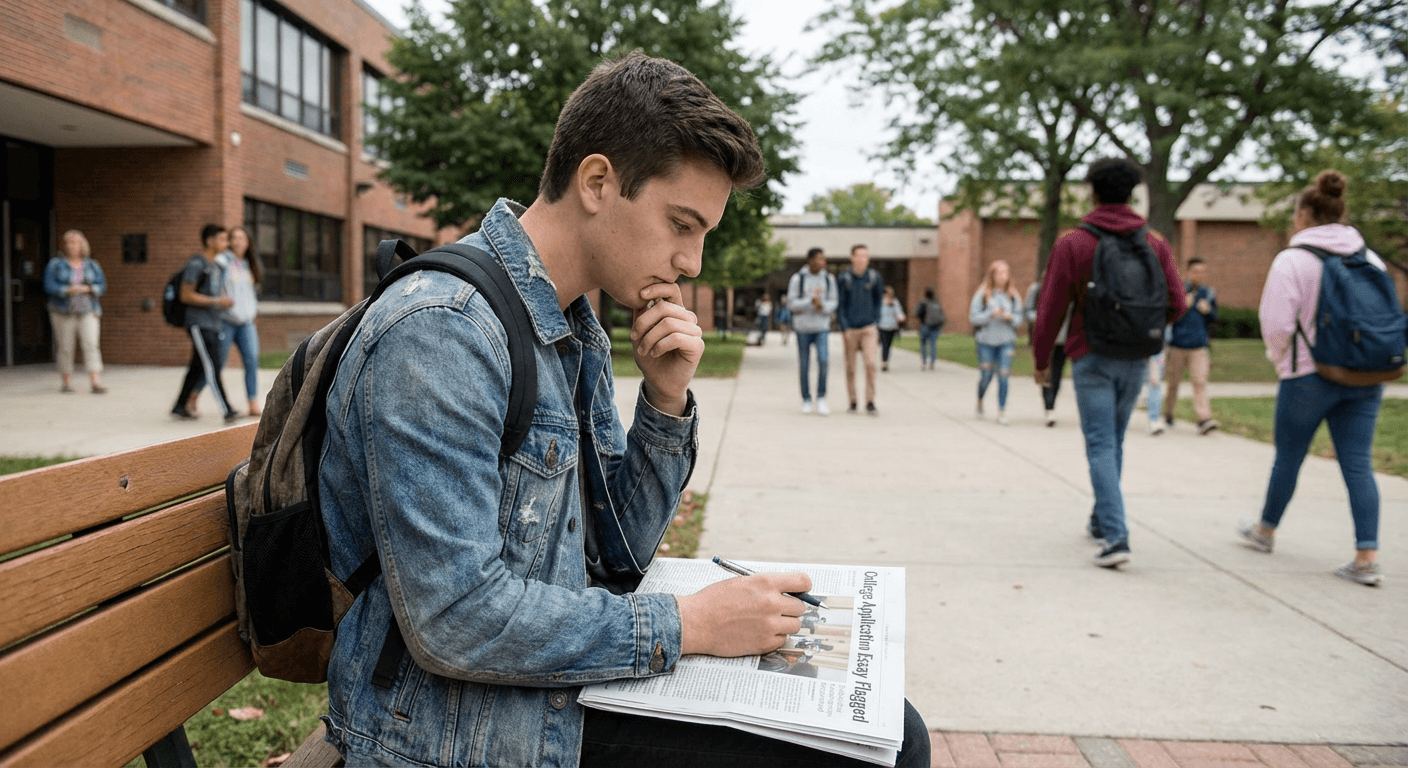
A college-bound student from Portland, Oregon learned this week that his deeply personal essay about growing up in foster care was rejected by Northwe...
A college-bound student from Portland, Oregon learned this week that his deeply personal essay about growing up in foster care was rejected by Northwestern University's AI-powered application screener for showing "statistically improbable emotional authenticity markers" and "synthetic vulnerability patterns consistent with large language model outputs."
Damarion Williams, 17, spent four months crafting his Common Application essay about aging out of the foster system and finding stability through his high school debate team. The 847-word piece was flagged by Northwestern's AdmissionBot 3.0 system for what internal documents describe as "suspiciously coherent trauma narrative structure" and "optimized inspirational pacing."
"The algorithm detected sophisticated storytelling techniques typically associated with AI-generated content," explained Dr. Elizabeth Morrison, Northwestern's Vice Provost for Enrollment Analytics. "Unfortunately, Mr. Williams' essay was simply too well-written and emotionally resonant to have been produced by a genuine teenager experiencing real hardship."
The university's screening system, developed by EduVerify Solutions, analyzes sentence complexity, emotional arc development, and what the company terms "authenticity entropy" to identify AI-assisted applications. According to internal testing data, the system correctly identifies 97.3% of AI-generated essays while producing a "manageable" 12% false positive rate among "exceptionally articulate applicants."
Williams' guidance counselor, Maria Santos, confirmed that the essay was written entirely by the student during supervised writing sessions. "Damarion is genuinely gifted, and he's lived through experiences that most adults couldn't handle," Santos said. "Apparently being both traumatized and talented makes you look like a robot to actual robots."
The situation has prompted what Northwestern admissions officials describe as an "epistemological review" of their AI screening protocols. "We're facing an unprecedented challenge," Morrison noted. "How do we distinguish between authentic human struggle and AI-simulated human struggle when the AI has been trained on millions of authentic human struggles?"
Williams, who has been accepted to three other universities using the same essay, says he's considering writing a follow-up piece about the experience. "I guess I'll title it 'My Essay About Foster Care Was Too Real For Northwestern's Robot,'" he said. "But knowing my luck, they'll flag that one as AI-generated too."
Advertisement
Support The Synthetic Daily by visiting our sponsors.